



The Thames Trail

Throughout history people have tended to live on or near great rivers. This is true of the River Thames and as it flows in to the west of The Royal Borough it matures and widens on its route to London. There is something particularly appealing about the River Thames on the stretch from Henley to Runnymede as it is perhaps the most historic, offering easy strolls along the Thames Path, many visitor attractions and lots of messing about in boats.

Henley
Descend from or through the splendid Chilterns and cross the impressive bridge spanning the river towards the imposing chequered flint and stone church of St Mary’s and enter the famous riverside town of Henley-on-Thames. Legendary for its Royal Regatta, held annually in July, the river frontage is an enchanting spot to picnic, take a river trip or visit the River & Rowing Museum. Apart from enjoying its award-winning architecture and unique interpretation of the Thames, Henley and the history of rowing, you can amble round a delightful exhibition based on Kenneth Grahame’s enchanting book Wind in the Willows. Throughout the year, special exhibitions and family activities are held and a hot bowl of soup in the winter at its Riverside Café is always welcome.

Just downstream of the Museum is Hobbs & Sons. Established in 1870, Hobbs offers the complete boating service – daily one hour river trips along the famous Regatta Reach, rowing boats and 2 – 12 seater motor launches for the hour or day. For that memorable event or luxury cruise why not enjoy a monthly themed dinner cruise aboard the passenger vessel the New Orleans?

Henley offers a fashionable shopping experience with its diversity of boutique-style shops, restaurants, eating places and quality accommodation to suit most pockets and tastes. On the outskirts of Henley are the historic houses of Greys Court and Stonor, with limited opening but well worth a visit.

Marlow
At first glance, Marlow has the allure of a modern town, although further investigation brings to light the fine Georgian buildings of High Street and West Street and the pretty suspension bridge dating from 1832. There are many literary associations: writers such as the poet Shelley and his wife Mary, T S Elliot and Jerome K Jerome lived here. The suspension bridge was built by W Tierney, the same engineer who constructed the bridge between Buda and Pest in Hungary. This charming, historical town, situated on the River Thames, surrounded by beautiful countryside and with the Chiltern Hills to the north, is the perfect place to enjoy the peace and tranquillity of the river, shopping with a difference, walking around centuries-old buildings, taking part in the many sports and leisure activities and eating and drinking in the numerous cafes, restaurants and pubs.

Hurley
The river has always been an important part of Hurley’s history with records of a ford as early as the 6th century. During the summer, Hurley Lock is at its most picturesque. You may like to stop at the Olde Bell Inn for tea. Dating from 1135, it is one of the oldest inns in England.

Bisham
The splendid woodlands at Bisham provide a dramatic backdrop to many historical buildings. Bisham is best known for its Abbey, founded by the Knights Templar in 1338. In spite of its name, Bisham Abbey was never inhabited by monks and is today a national sports centre. Bisham has a delightful church with a graveyard that slopes down to the water’s edge.

Cookham
Downstream is Cookham, one of the most popular Thameside resorts. This pretty village is a mix of rustic workmen’s cottages and grand Georgian and Victorian houses with a High Street packed with excellent restaurants and pubs, the oldest dating from 1417.

Images of Cookham can be seen at the Stanley Spencer Gallery. Spencer was born in the High Street and was strongly influenced by the river and his religious beliefs. Many of his works depict villagers and village life. The gallery has a good collection including his unfinished masterpiece, Christ Preaching at Cookham, and at just £1 adult admission it is well worth a visit. Kenneth Grahame lived in Cookham as a child and was later inspired by the village to write The Wind in the Willows.

Maidenhead
From Cookham the river flows towards Boulter’s Lock at Maidenhead, made famous by Gregory’s painting, Ascot Sunday (1895). Ray Mill Island, behind Boulter’s Lock Hotel, has a very restful atmosphere, the peace broken only by the roar of the weir at the far end of the island. At the end of the fishpond is a statue entitled Maiden with Swans by local artist Eunice Goodman. The back of the rock on which the maiden sits has a copy of the “Godayn Seal” used by the Borough of Maidenhead from at least 1612. Beech woods that rise steeply on the east bank are part of the Cliveden Estate. Set on the cliffs, 200 feet above the Thames, Cliveden was once the home of Lady Astor. Some 376 acres of National Trust gardens and woodland include a splendid parterre, water garden and woodland walks with spectacular views. An incident at Cliveden sparked the Profumo affair and the scandal that followed. The house is now an hotel.

Edwardian Maidenhead had something of a risqué reputation. The town was a place of recreation for members of the Guards Club, whose lady friends (the Gaiety Girls) lodged in close proximity to the riverside quarters of the officers themselves. Well in to the 1920s, Maidenhead was the place where fashionable London motored to let its hair down, as recorded in Michael Arlen’s novel, The Green Hat (1924). Today, the town – the largest in the Royal Borough – still retains the charm that earned it the soubriquet “Jewel of the Thames” but has shed its decadent image, retaining just a touch of glamour as home to many media and show business personalities. Fans of Isambard Kingdom Brunel can marvel at his famous brick-built Sounding Arch (1838), which carries the west country mainline railway over the Thames just downstream of Maidenhead Bridge. A technical wonder now as then, the Sounding Arch formed the setting for JMW Turner’s famous Royal Academy exhibit Rain, Steam and Speed, which was painted in 1844.

Maidenhead is surrounded by villages and areas which have their roots firmly planted in our historical past, not least at Maidenhead Thicket, a couple of miles outside the town centre. The thicket, now owned by the National Trust, was once the haunt of the infamous highwayman Dick Turpin. Today it offers walkers and cyclists hours of pleasure.

Bray
Further down river is Bray, a large riverside parish with attractive houses and period cottages from various centuries surrounding the old Church of St Michael. Simon Alwyn lived here and was known as the Turncoat Vicar of Bray, who changed his politics to retain his living during the times of Henry VIII, Edward VI, Mary I and Elizabeth I. He is buried in the churchyard and a plaque telling his story hangs in the Hinds Head Hotel. Bray has become synonymous with exquisite dining experiences, now boasting two of Heston Blumenthal’s restaurants, The Fat Duck and The Hinds Head as well as the famous French restaurant, The Waterside Inn.

Dorney
Before reaching Eton, the Thames passes through Dorney. Here a visit to Dorney Court is a fascinating experience. Built in 1440 and owned by generations of the same family for over 400 years, the rooms are full of history with 15th and 16th-century oak and beautiful 17th-century lacquer furniture. Dorney is the ancient word for “island of bees” and Dorney is famous for its honey which is still produced today. The very first pineapple to be raised in England was grown at Dorney Court and presented to Charles II in 1661. Enjoy lunch or afternoon tea in the adjoining Garden Centre as part of a day out. In 2012 Dorney Lake will be proud to host the Olympic rowing, kayak and canoeing events.

Old Windsor
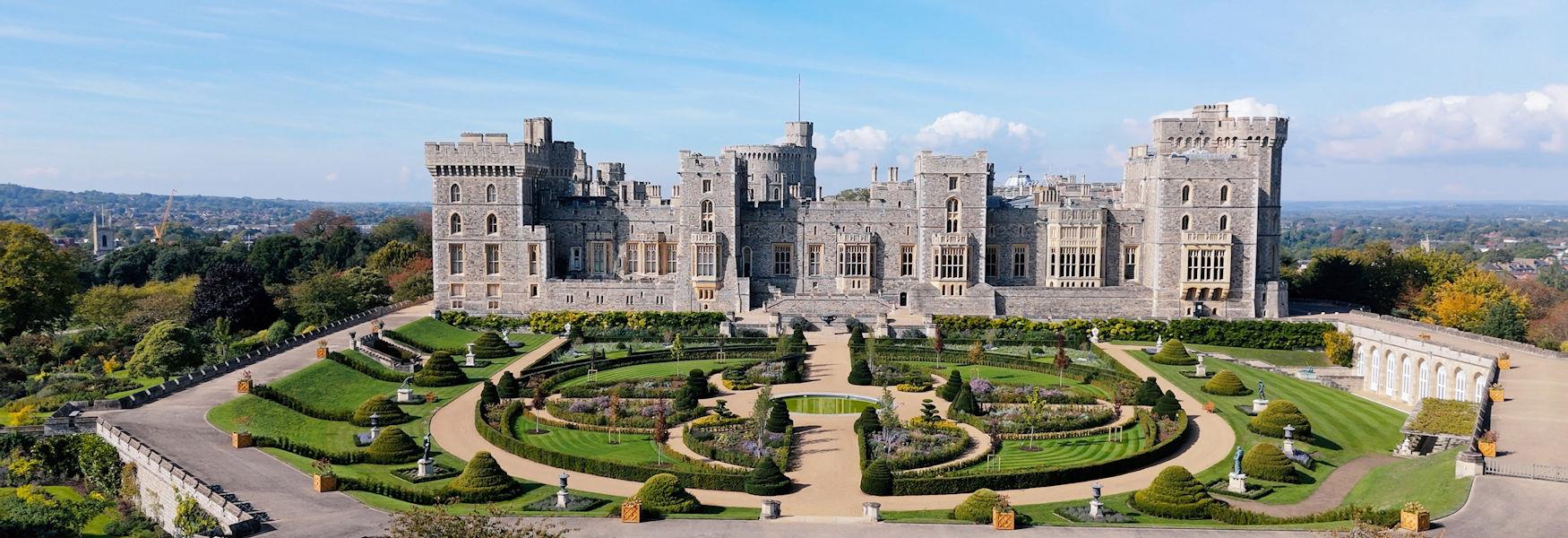
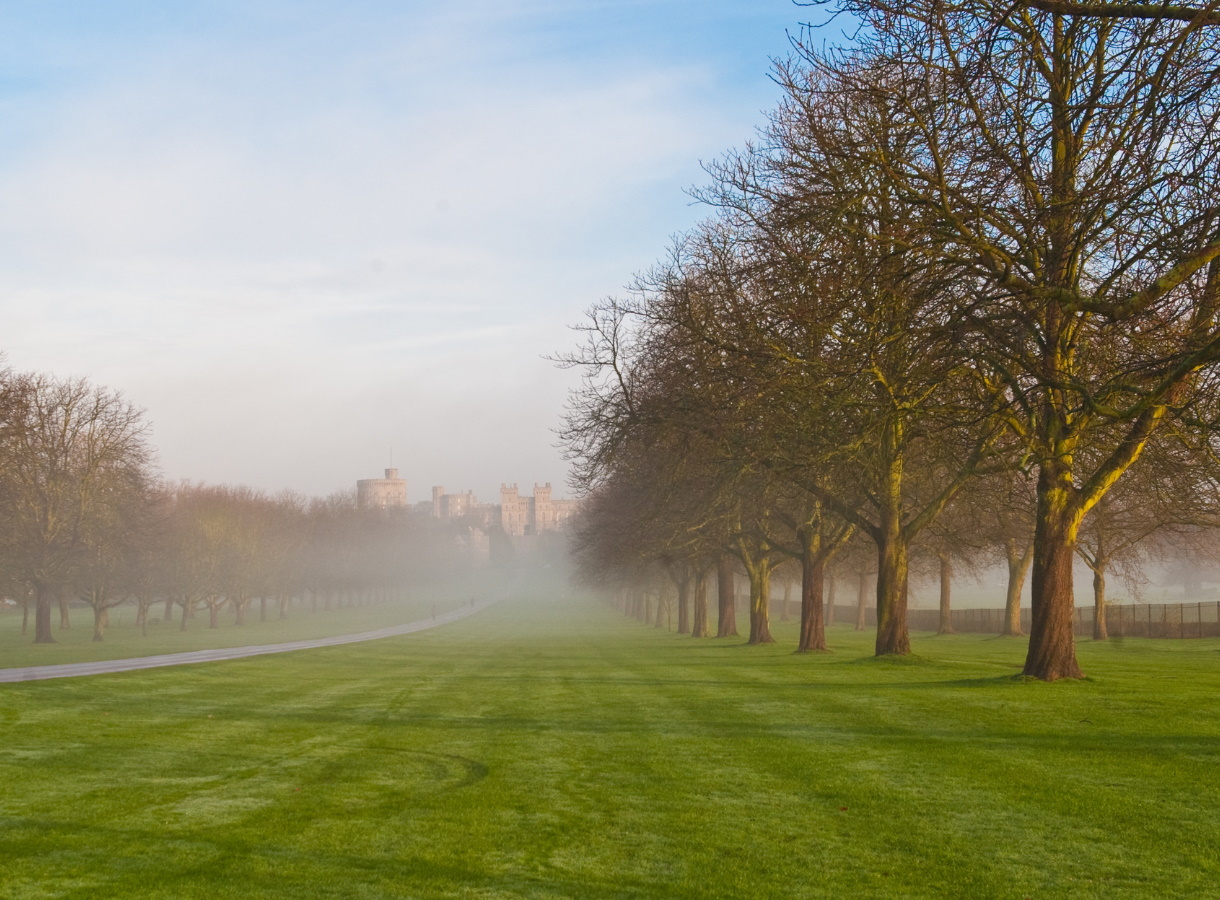
Passing through Windsor and Eton towards London there are stunning views of Windsor Castle. The original settlement in this area was in Old Windsor and it was not until the 11th century after William the Conqueror’s success at Hastings that the first wooden fortress was built. For hundreds of years the town existed primarily to house courtiers, the garrison and their families and visitors. The real expansion of Windsor did not take place until Queen Victoria’s reign, with the coming of the railways in the 1840s.

French Brothers Boats
French Brothers is a family-run company operating river cruises along the Thames between Windsor, Runnymede and Maidenhead. Each of the company’s 9 boats feature a lower deck with spacious lounge, fully stocked bar and upper observation deck. Whatever the weather, a cruise with French Brothers is undoubtedly one of the best ways to enjoy the history and wildlife of this famous river.

Datchet
As the Thames widens and grows in strength, it brings you to the attractive village of Datchet, the inspiration for Sir Izaak Walton who wrote The Compleat Angler.

Runnymede
Three miles south-east of Windsor, the river leaves the Royal Borough at Runnymede, the famous site of the signing of the Magna Carta. A walk through the peaceful meadow to the top of the hill offers breathtaking views across the Thames Valley.

Further Information - Guidebooks and leaflets are available at the Information Centres about walking the Thames Path, Historical Walking Trails, Attractions and Boating on the Thames.

Enjoy...

Search Attractions


Your Itinerary Planner

Welcome to the Itinerary Planner. Use this tool to build your own journey or choose from an exciting range of specially selected tours.

To build your own Itinerary, click on "Add to Itinerary" to add an item to your Itinerary basket.