To provide you with the best experience, cookies are used on this site. Find out more here.
To provide you with the best experience, cookies are used on this site. Find out more here.



To build your own Itinerary, click  to add an item to your Itinerary basket.
Already saved an Itinerary?


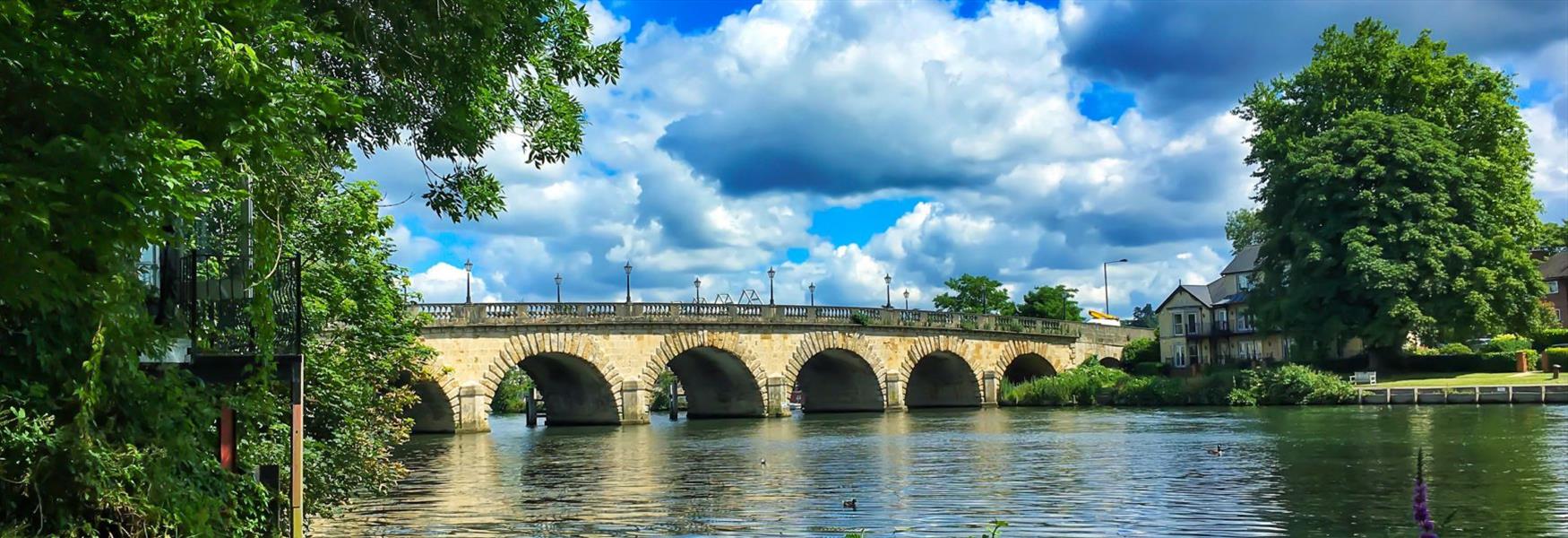
As the Thames performs its geographical duty of marking the county boundary between Berkshire and Buckinghamshire, it ambles along a gentle right-hand curve from Hurley to Bray, to complete a half-circle.
In doing so it embraces some of the loveliest countryside in the Middle Thames, the river’s best sailing reach, a world-famous punting course, and laps the edge of the Chiltern spur where history has been made down the ages to the present day – from Saxon battles and Christian baptisms, to modern politics. Unhappily punting has moved away and the power boats have taken over, but the scullers are still on the water.
At the heart of the half-circle is Maidenhead. Since Edwardian days it has been a place for fun. Once it was champagne parties, camping punts and Guard’s Club occasions, culminating in the season’s most fashionable event ‘Ascot Sunday’, a day of finery on the river.
During the 1920s Maidenhead had a string of harmless drinking clubs which earned it notoriety but its naughty past began much earlier, when the Gaiety girls were lodged here; in fact there is a short piece of riverside known locally as Gaiety Row.
No one knows where the name Maidenhead, which first appeared in 1296, came from but it owes its foundation to the bridge and a small chapel at a river crossing – once a ford through a much wider and shallower Thames. The borough church of St Mary Magdalene and St Andrew is the successor of this chapel and like it, it’s close to Chapel Arches which now span a flood relief ditch.
The town traces its beginnings from that chapel and its most historic possession is its charter of incorporation from Queen Elizabeth I signed in 1582.
Find out more about Maidenhead's history.
The coming years for Maidenhead are going to be exciting with extensive development being seen across the town.
Much of the investment coming into Maidenhead is as a result of Maidenhead being a station on the Elizabeth Line allowing passengers to travel through central London without having to change trains, further improving its excellent linkages with the City.
Maidenhead will be a town for everyone that keeps community at its heart. Its position in the leafy setting of the Thames Valley yet under an hour away from London will create a vibrant, thriving destination that has high quality buildings, a buzzing calendar of events, and lively cafes, bars and restaurants making it a place that Maidonians can be proud of and that visitors will be keen to explore.
Find out more about things to do and shopping in Maidenhead.
Ratings & Reviews
Powered By


Want to receive Windsor tips, ideas and inspiration? Subscribe to our enewsletter!
Want to hear more? Sign UpX
In partnership with









© Royal Borough of Windsor and Maidenhead 2026. All Rights Reserved